
shell
ผู้เยี่ยมชม
benducket3211@gmail.com
Is an Electric Skateboard a Smart and Exciting Choice for Modern Transportation? (74 อ่าน)
12 ก.ย. 2569 21:33
An electric skateboard has become a popular option for people who want a convenient, compact, and enjoyable way to travel. Combining the familiar design of a traditional skateboard with an electric motor, rechargeable battery, and wireless controller, it provides a modern approach to short-distance transportation. Riders can use an electric skateboard for commuting, recreational cruising, campus travel, neighborhood trips, and other suitable journeys.
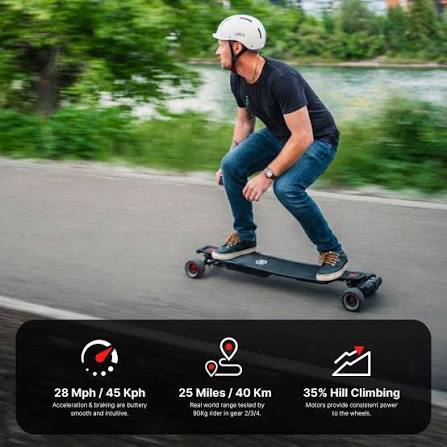
Unlike a traditional skateboard, an electric skateboard does not require continuous pushing to maintain movement. The electric motor provides the necessary power, while the rider controls acceleration and braking through a handheld remote. This makes riding less physically demanding and allows users to focus more on balance, steering, and enjoying the journey.
The increasing popularity of electric mobility has also encouraged manufacturers to improve battery technology, motor efficiency, wheel designs, braking systems, and overall board construction. Today's electric skateboard models can range from lightweight beginner boards to powerful long-range electric skateboards designed for experienced riders.
Electric Skateboard Design and Modern Features
The design of an electric skateboard combines mechanical components with electronic technology. At the center of the system is a rechargeable battery that supplies energy to the electric motor. An electronic speed controller manages the power delivered to the motor, while a wireless remote gives the rider control over acceleration and braking.
The deck is an important part of the riding experience. Some electric skateboard decks are flexible and designed to absorb road vibrations, while others are relatively stiff for greater stability. The length and width of the deck can also affect balance and comfort. A wider platform may provide more room for the rider's feet, while a compact deck can make the board easier to carry.
Electric skateboard motors are generally available in hub motor and belt-drive configurations. Hub motors are integrated into the wheels, giving the board a clean appearance and reducing the number of exposed moving parts. Belt-driven motors use a belt and pulley system to transfer power to the wheels. They are often appreciated for strong acceleration and responsive performance.
Battery capacity is another major consideration. A larger battery can provide a longer potential riding range, but real-world performance depends on several factors. Rider weight, speed, road conditions, hills, temperature, acceleration, and riding style can all influence battery consumption.
Many modern electric skateboards also include useful technology features. Adjustable riding modes can allow beginners to start at a lower speed before moving to faster settings. Some boards offer regenerative braking, LED lighting, battery indicators, and smartphone connectivity. These features can make the riding experience more convenient and easier to manage.
Wheel selection is equally important. Larger wheels can handle cracks and minor road imperfections more effectively, while softer wheels can reduce vibrations and create a smoother ride. Smaller or harder wheels may feel more responsive on smooth pavement. The ideal wheel setup depends on the surfaces where the electric skateboard will normally be used.
Electric Skateboard Performance and Everyday Riding
Performance is one of the biggest attractions of an electric skateboard. The motor allows riders to travel without continuously pushing with their feet, making the board suitable for cruising and short-distance transportation. Depending on the model, an electric skateboard can provide different levels of acceleration, speed, and range.
Battery range is especially important for people who want to use an electric skateboard for commuting. A rider traveling several kilometers each day may need a board with a larger battery capacity. However, advertised range should be viewed as an estimate because actual riding conditions can significantly affect battery performance.
High speeds, frequent acceleration, steep hills, heavier riders, and rough surfaces can all consume more battery power. Riders interested in longer journeys should therefore consider realistic riding conditions rather than relying only on the maximum range stated by a manufacturer.
Stability is another important part of electric skateboard performance. A well-designed deck and truck system can help the rider maintain control while accelerating, turning, or braking. The trucks connect the deck to the wheels and influence the board's handling characteristics. Riders who enjoy smooth carving may prefer a more responsive setup, while commuters may value stability.
Portability can also influence the choice of an electric skateboard. Although these boards are much smaller than cars or many other electric vehicles, the battery and motor make them heavier than traditional skateboards. A lightweight model can be easier to carry into an office, classroom, home, or vehicle, while a long-range board may have additional weight because of its larger battery.
Comfort is particularly important during longer rides. Larger wheels, a suitable deck, and well-designed trucks can help create a smoother experience. Riders who frequently travel over uneven pavement may benefit from an electric skateboard designed specifically for rougher urban surfaces.
Choosing the Right Electric Skateboard
Choosing an electric skateboard should begin with the rider's intended use. Someone looking for occasional recreational rides may prefer a lightweight board with moderate speed and comfortable handling. A daily commuter may instead prioritize battery range, durability, braking performance, charging convenience, and portability.
The riding environment should also influence the decision. Smooth city pavement can work well with a wide range of boards, while rough roads may require larger wheels and a deck that provides better vibration absorption. Riders who regularly travel over hills should also consider motor power because stronger motors can provide better climbing performance.
Build quality is another factor that should not be ignored. The deck, trucks, wheels, motors, battery enclosure, controller, and charging system all contribute to the reliability of an electric skateboard. A durable construction can make the board better suited to regular use.
Battery maintenance is equally important. Riders should use the recommended charger and follow the manufacturer's charging instructions. The board should be stored in an appropriate environment and protected from excessive heat, moisture, and physical damage. Proper care can help maintain battery performance and extend the board's usable life.
Safety should remain a priority for every rider. Beginners should practice acceleration, braking, turning, and stopping in an open and controlled area before entering busier environments. A properly fitted helmet is strongly recommended, especially for beginners and riders traveling at higher speeds.
It is also important to check local regulations before riding an electric skateboard in public spaces. Rules regarding sidewalks, roads, bike paths, speed limits, helmets, and permitted areas can vary between cities and countries.
Conclusion: Is an Electric Skateboard Worth Considering?
An electric skateboard offers an appealing combination of technology, convenience, portability, and entertainment. Its electric motor reduces the physical effort required for movement, while modern battery systems can provide useful riding ranges for commuting and recreational activities. Features such as wireless remotes, regenerative braking, adjustable riding modes, powerful motors, and improved wheel designs have made electric skateboards increasingly practical.
The best electric skateboard is not necessarily the fastest model available. Battery range, motor type, deck construction, wheel size, weight, braking performance, durability, and intended riding environment are all important considerations. A beginner may value stability and simple controls, while an experienced rider may prefer greater acceleration, range, and performance.
43.242.176.93
shell
ผู้เยี่ยมชม
benducket3211@gmail.com